Ingredients
/
Fish & Seafood
/
Oysters
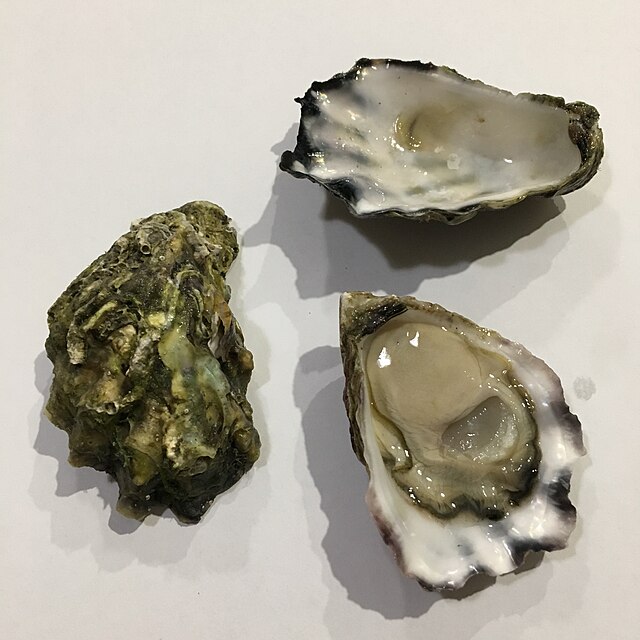 Peak season
Season
Aug–Apr
Ruled by
☽ Moon
Calories
65 kcal
Protein
10.8 g
MW reference
1
Oysters
Oysters peak from September to April. They are at their best when the water is cold, which keeps the meat firm and flavorful. As filter feeders, they improve water quality in their local environment. Farmed and native bed-grown options are the standard choices for maintaining stable coastal populations.
Nutrition facts
Per 100 g
Energy65 kcal / 275 kJ
Protein10.8 g
Carbs2.7 g
Fat1.3 g
— saturated0.2 g
Salt510 mg Na
Iron5.70 mg
Figures are estimates per 100 g from reference data and may differ from the product you use. Always check the packaging for accurate nutrition and allergen information. Not a substitute for professional dietary advice.
Reference data McCance & Widdowson 2021
Oysters, raw · 16-260 · JM
Analytical and literature sources
Energy & Proximates
Energy65.00kcal
Energy275.00kJ
Water85.70g
Protein10.80g
Fat1.30g
Carbohydrates2.70g
of which sugars—g
of which starch—g
Fibre (AOAC)—g
Fibre (NSP)—g
Alcohol—g
Fat Breakdown
Total fat1.30g
Saturated0.20g
Monounsaturated0.20g
Polyunsaturated0.40g
Trans—g
Omega-30.370g
Omega-60.050g
Cholesterol57.00mg
Minerals
Sodium510.00mg
Potassium260.00mg
Calcium140.00mg
Magnesium42.00mg
Phosphorus210.00mg
Iron5.700mg
Copper7.500mg
Zinc59.200mg
Selenium23.00µg
Iodine60.00µg
Vitamins
Vitamin A75.00µg
Vitamin D1.000µg
Vitamin E0.850mg
Vitamin C—mg
Thiamin (B1)0.150mg
Riboflavin (B2)0.190mg
Niacin (B3)1.800mg
Vitamin B60.160mg
Vitamin B1217.000µg
Folate—µg
Recipes using Oysters